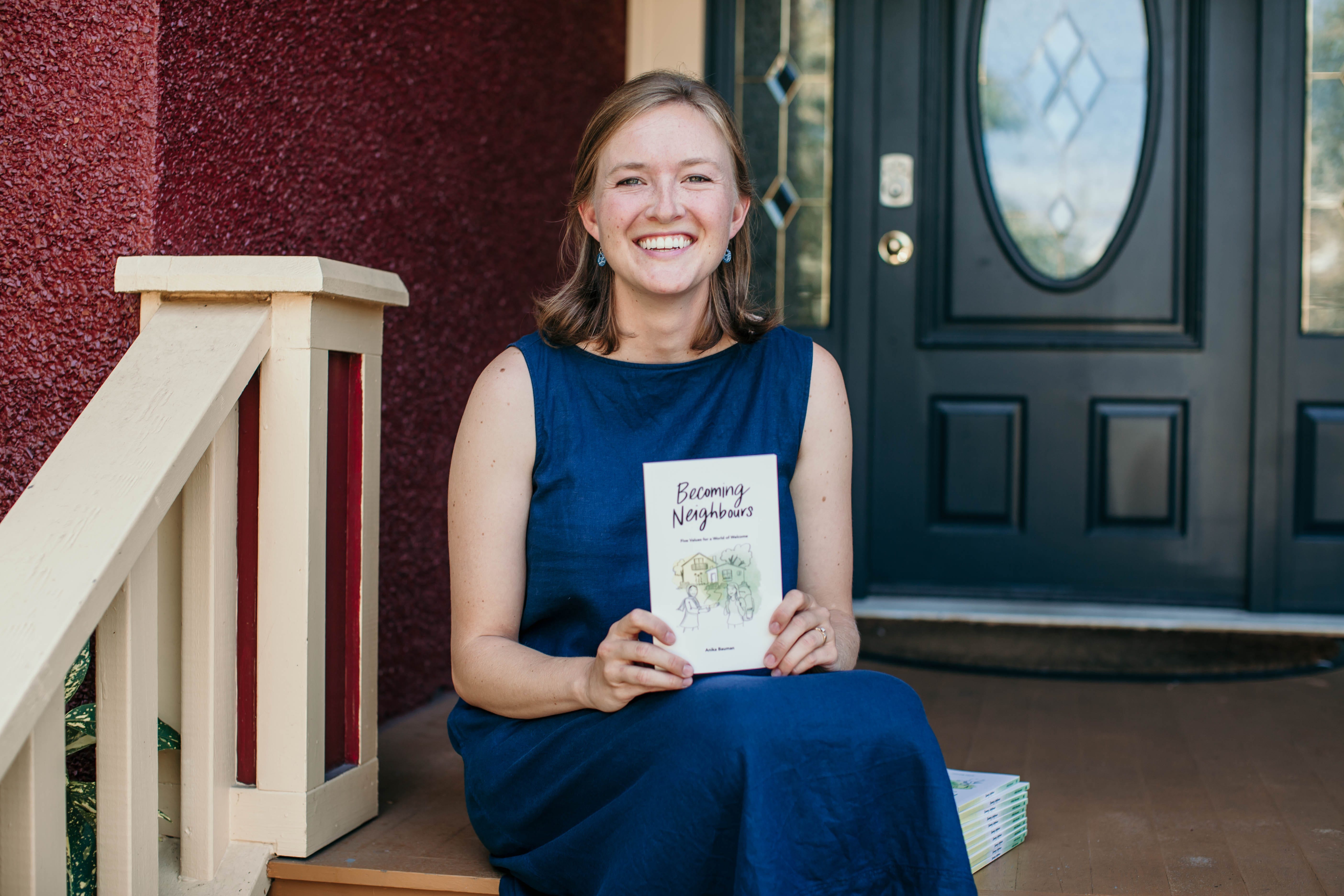
In September 2021 I was sitting in our living room in Vancouver, reading excerpts from a crisp new copy of Becoming Neighbours. In front of me was my laptop, and a grid of friends, strangers, and former neighbours from Kinbrace. We were gathered virtually (it was 2021, after all) to launch this little book into the world, unsure of where it would land. In the time since, it has landed in many hands — most recently, those of my three-year-old daughter.
This evening before dinner I was sitting in front of the same laptop where I crafted the words for Becoming Neighbours when Lydia came and found my lap. I asked her if she’d seen my book before and she said she hadn’t so we pulled it off the shelf and flipped through, searching for each page with a picture. “Tell me about this one… Who is she?… Is this your house?… Is that my bike?”
I told her about the boy who loved chickens and my friend who was blind and the trampoline and the mug that says ‘HOPE.’ As we turned the pages, I reread bits and pieces; I’ll share a few with you here. But first, as a refresher for myself if nothing else, a bit of the backstory.
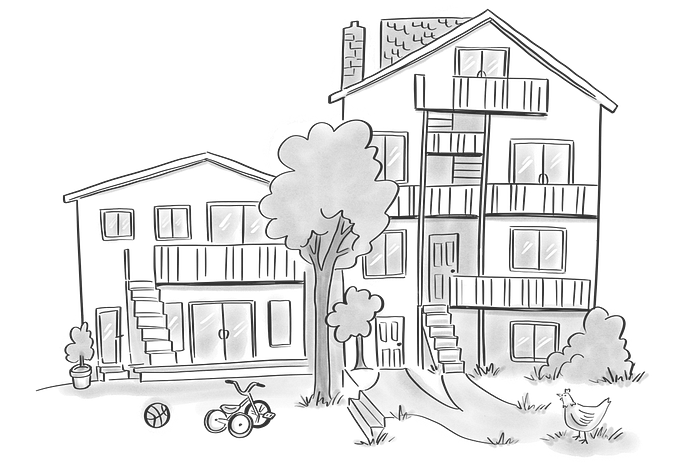
I lived at Kinbrace, a community for people experiencing forced displacement, from June 2017 until January 2021. I learned and lived so much in those three and a half years and often struggled with the paradox of having so much to write about, such storied days, and so little energy at the end of them to write anything. (Hmm, sounds a little like parenthood… in this precise moment the baby wakes and I go nurse him back to sleep.)
During my final few months living in the community, I was given the go-ahead to spend my days writing about my experience at Kinbrace. I became a self-appointed writer in residence. I would sit at my perch in my upstairs apartment and watch a house being built across the alley while trying to build something with words. I didn’t know it would be a book at first, I just knew I needed to write. (During this time I wrote weekly articles that can now be found in the archives of this Substack — I dare you to go digging.)
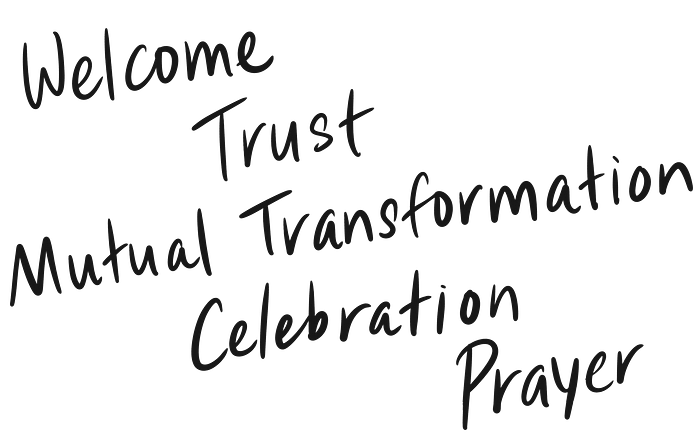
Eventually, a book did start to take shape. It centred on the five core values that are at the heart of the community, with stories, reflections, and drawings to illustrate them.
It became the shared labour of many people. First and foremost, there was Loren Balisky, co-founder of Kinbrace and co-Director at the time. His influence, his words, his example, shaped my thinking about living alongside refugee claimants and the values that undergird this life. He was the primary advocate for this project from start to finish and the sounding board for my own voice as a writer.
Okay, I didn’t come here to write a second acknowledgements page, but I can’t help myself. To reflect on the work of this book is to recall the people who made it. The refugee claimant neighbours, the gifted editors who came out of the woodwork to offer their services free of charge, the classroom-full of people who took time to share their feedback on the first draft. Five years out, I am still often reminded of these people.
There have been times (many times, if I’m being honest) when I have questioned the value of this offering, this book. I felt that again as I opened it this evening. (Does this kind of self-doubt just come part n’ parcel with being a writer, with being an artist of any kind?) But, if celebration is a value, I also believe it can be a discipline. So here I am, practicing celebration. I remember with gratitude the faces from that Zoom grid five years ago. They remind me of all that you don’t see when you hold a copy of Becoming Neighbours in your hands. And of the privilege it was to write it, to be its author.
So, Happy Birthday, Becoming Neighbours.
Welcome
“Welcome” is a greeting that goes both ways. At Kinbrace, welcome begins with the recognition that we are all seeking safety and belonging. From that common ground, we choose to live in solidarity as neighbours. …When we are at our welcoming best, our welcome is not simply a courtesy, but a true invitation into shared life. When we live side by side, people who are experiencing forced displacement are no longer “strangers”; they become neighbours, friends, sisters or brothers, and people with inherent dignity and agency. We know we are living in solidarity with our refugee claimant neighbours when we make our home together — a home where each of us has a place and a voice to say, “Welcome.”
Trust
Building trust begins in this fragile place where our vulnerabilities meet — making eye contact, offering a smile, sharing a name, initiating an awkward first attempt at conversation. For those forced to flee their homes, as well as those in the position of offering new ones, these first wavering extensions of trust affirm our shared humanity. Over time, trust that has eroded can slowly be rebuilt. The value of trust invites us to begin unlearning suspicion at the level of the human heart.
Mutual Transformation
A listening posture that nurtures mutual transformation involves leaning into relationships with openness and curiosity. It requires letting go of some of our misplaced motives, such as pursuing relationships with people who are different from us in an attempt to change them or even to learn something from them. Instead, the value of mutual transformation leads us to enter relationships with open hands, acknowledging, “This encounter might change me.” Striving to listen well creates spaciousness in our conversations, where the outcome of our encounters becomes unknown, mysterious, even sacred.
Celebration
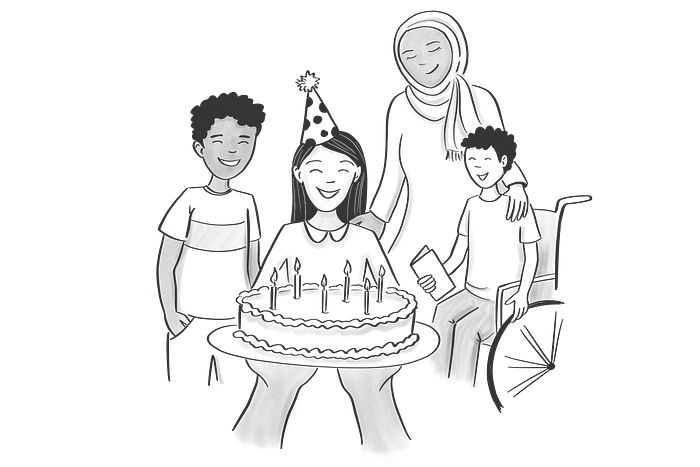
As celebration works its way into our days, we discover that sorrow and joy aren’t polar opposites, nor are they mutually exclusive. Celebration is possible in a season of intense sadness, and it often wells up out of the deep space of loss. Only when we travel to the depths of sorrow do we discover a joy that we thought was impossible. My early days at Kinbrace were revelatory. I remember reflecting on the influx of both joy and sorrow in my life and wondering, “What was I doing before I met these neighbours? Living in some kind of safe emotional middle-ground?” Now I was experiencing a fuller spectrum of emotions — more profound losses and greater joys than ever before. Both the intimate conversations when a grief was shared and the boisterous laughter at a birthday party were offering me a taste of a broader, deeper, more abundant life.
Prayer
We choose to orient ourselves around the value of prayer in part because it transcends the boundaries of religious belief systems; it is a way of being rather than a way of believing. While belief can become abstract and exclusionary, prayer remains invitational. Rather than focusing on right belief, prayer invites us into right relationship with ourselves, with our neighbours, with God, and with all of creation. Prayer is less about how we pray and more about what happens to us when we pray.
There is human resilience at work in each of us, but it is the presence of God that sustains us, enabling us to receive welcome, risk trust, experience mutual transformation, and celebrate — over and over again.

Fun fact: In the time since Becoming Neighbours was published, someone published a new book called Becoming Neighbors. Gasp! No hard feelings, Amar D. Peterman, you just forgot a ‘u’ :)